
Crystal Neighbors: Block Sources
The best official sources show different parts of a Crystal block. The county map can locate adjoining parcels. PINS supplies parcel and tax context. City maps distinguish neighborhood, ZIP, and municipal layers. Community pages identify programs and public-facing organizations. None is a roster of the households on a block, and a parcel owner, deed party, voter, or meeting participant is not automatically a present resident.
| Source | What It Shows About a Block | Access |
|---|---|---|
| Hennepin Interactive Property Map | Parcel location and a route to parcel research for a selected property. | Online, JavaScript-driven county map. |
| Hennepin PINS | PID, legal description, taxes, assessments, sales, and recent recording-history context for one parcel. | Online by address, PID, addition, or map; county counter and phone alternatives exist. |
| RecordEASE Public Search | Limited free land-title index for parties and legal descriptions connected to an instrument. | Online index, public kiosk, subscription, recorder staff, or copy request as needed. |
| MNVotes | Official individual registration lookup, not a blockwide people list. | Name, date of birth, and address-based process; voter-list copies have statutory conditions. |
| Crystal civic sources | Public programs, organizations, meeting records, and dated civic context. | City webpages, meeting materials, or a focused public-record request. |
Start with a parcel when the question is about the physical block. Move to a dated public record only when it answers a specific, lawful question. The record trail becomes more reliable when it preserves what was actually shown, the date it was viewed, and the boundary between property information and private household information.
Mapping Crystal Neighbors by Parcel
The Hennepin Interactive Property Map is the starting visual tool for the immediate block. Its text-only inspection did not expose a confirmed radius or bulk-neighbor function, so use the documented parcel-by-parcel method rather than claiming that the map can generate a surrounding-household list. Hennepin County Library’s house-history guidance says the current map carries property description and tax information, and its Surveyed Properties layer appears after zooming in.
- Pan and zoom to the Crystal address in the county property map, then select the target parcel.
- Record the displayed PID and follow the property-information route for that single parcel.
- Repeat for parcels that visibly border the target, preserving each PID and legal description separately.
- Use PINS to inspect the allowed parcel context, then use a recorded instrument only where a land-title question requires it.
- For the full record chain along a named street, use the Crystal street directory rather than expanding a block check into a broad people search.
This process maps the block’s property pattern. It does not establish who lives in each home, whether an owner occupies it, or whether a person connected to an instrument remains at the address. A correct Crystal neighbor lookup keeps those conclusions separate.
Crystal Neighbors and the PID Handoff
Hennepin PINS makes the PID the practical handoff between an address and a property record. The address search requires house number and street name; unit is optional. It also supports PID, addition, and map routes. Search additions when an older document uses a plat name and lot or block rather than a modern street address. A new parcel division or combination can also affect which PID is current.
The county says PINS is updated Monday through Friday around 9:15 p.m. Central. It can display taxes due, current and prior-year taxes, assessment values, tax-parcel description, sales, and recent recording history. Its public landing page does not make PINS an owner-name search, and the research did not confirm every field on a live individual property card. Record only the fields actually displayed for the selected parcel.
For assistance beyond the online screen, the county lists the property-tax counter in Room A-600 of the Hennepin Government Center, 300 South Sixth Street, Minneapolis, and an automated 13-digit PID line at 612-348-3011. Use the counter or telephone information to resolve property data, not to infer private occupants.
Crystal Neighbors and Voter Records
MNVotes is an official individual registration lookup. It requires a name, date of birth, and address. Its address route can start with ZIP or county, but that does not make it a public block directory. The research did not retain a real voter result, and public pages should not reproduce one. A result or no-match is a status matter with its own timing and privacy limits.
The registered voter list request form has a separate controlled process. Minnesota law requires identification and a written lawful-use statement. A walking list is sorted by street and number and contains current registered voters, while detailed voting history has different fields and limits. The list cannot be published online as a searchable database, sold, or loaned. Minn. Stat. § 201.091 also protects safety-withheld information.
Hennepin County Elections can answer election questions at 612-348-5151, and Crystal’s City Clerk is the local election administrator. Keep voter information within its legal access conditions. It is not a substitute for consent, a community introduction, or a conclusion about every person who may live near an address.
Crystal Neighbor Community Sources
Crystal publishes a Neighborhood Map, but the research did not locate an official public directory of neighborhood associations, officers, membership lists, or private resident rosters. The city’s community pages are useful for learning which public programs and organizations exist around a block. They are not a way to identify every member or household.
Crystal Neighborhood Watch
Neighborhood Watch is a police and community program. New groups contact Officer Matthew Wright at 763-531-1026. It provides program information, not a membership list.
City Boards and Commissions
The boards and commissions page identifies public bodies and vacancy information. A dated appointment or meeting appearance needs its own official citation.
Community Organizations
The city organization directory lists public-facing groups and addresses. It is an organization reference, not a private membership source.
For a Crystal block question tied to a public decision, search the council meeting materials by address, project, or date. A packet can identify a public comment, committee action, or parcel reference at that meeting. It does not establish a current address for the speaker.
Crystal Neighborhood Watch Is Not a Roster
Crystal’s Neighborhood Watch information gives useful local context without naming private participants. The city says a new group expects at least 50% neighborhood attendance. Active groups hold two meetings each year, one of which may be a social or Night to Unite event and the other focused on crime prevention. Signs are limited to active groups.
The Crystal Neighborhood Watch page describes the public program structure rather than private rosters.
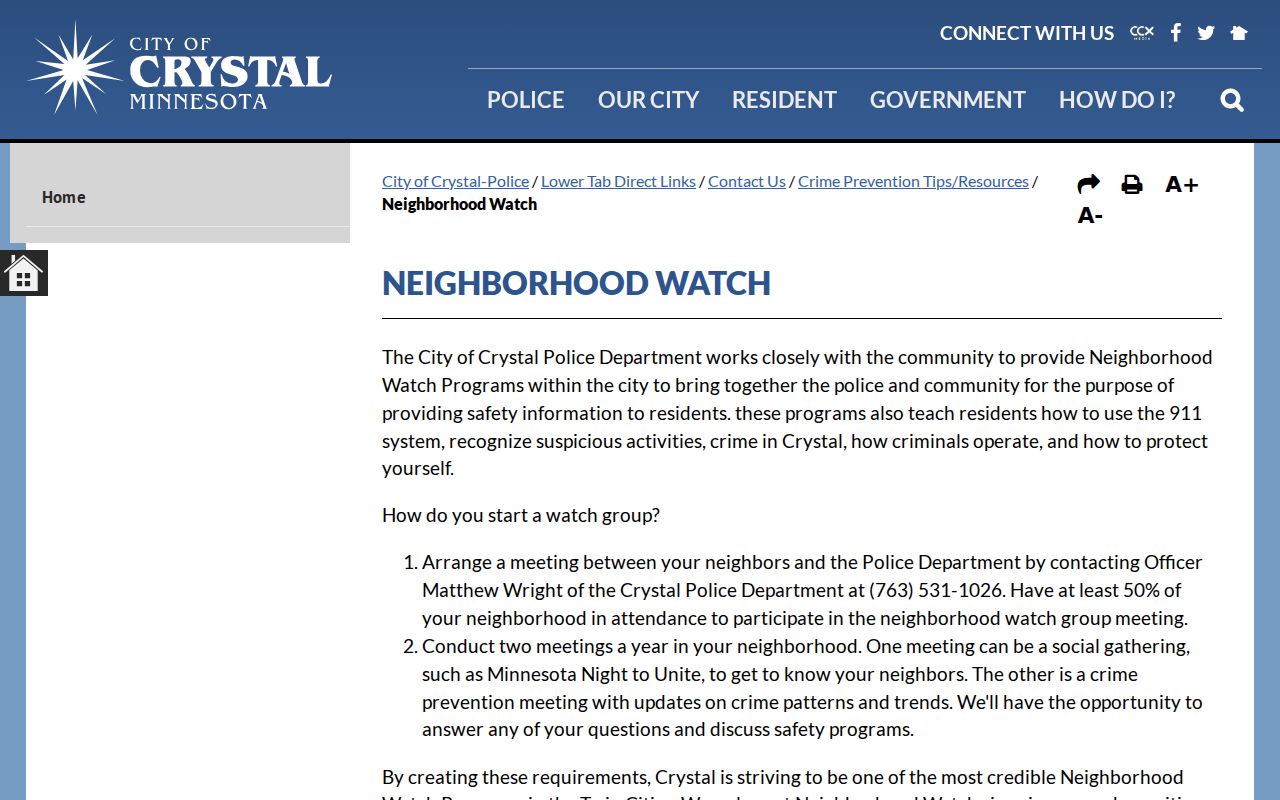
That distinction protects the program and the people who take part. Ask for public meeting notices or recognized-group contact information when that is the need. Do not request private membership information, and do not assume a sign or a neighborhood label identifies the people at a particular address.
Crystal Neighbors: Official and Commercial Tools
Official records and commercial neighbor tools serve different purposes. An official record has a named custodian, a stated access route, and defined limits. Commercial people-finding tools may collect or combine information from many sources, but their results still need a dated official check. No category should be treated as an occupant list or used to target a person.
| Source type | Useful for | Limit to keep |
|---|---|---|
| Official parcel and land records | Parcel identity, legal description, tax and recorded-instrument context. | A named owner or deed party is not automatically a current resident. |
| Official civic sources | Public program structure, meeting records, and organizations. | A public appearance is dated context, not a home-address statement. |
| Commercial people-finding tools | A possible lead that requires verification. | Data can be incomplete, outdated, or wrongly matched and should not replace a custodian record. |
Crystal’s public-record request route is the local fallback when a specific city record is not online. State the record type, date range, address or PID, department, and preferred format. Crystal says clear requests help; public information is generally supplied within 10 business days, inspection is free, copies are generally $0.25 per page, and search or retrieval costs may apply.
Crystal Neighbors and Privacy Limits
Minnesota’s Government Data Practices Act begins with a presumption that government data are public unless another law classifies them differently. It does not require an agency to create a new record or override a protected classification. If access is denied, ask for the statutory classification and the responsible authority. Inspection of public records is generally free, while allowed search, retrieval, copying, and transmission charges may apply.
Safe at Home protects the real addresses of eligible participants through a substitute-address program. Protected court addresses, private voter fields, driver data, utility information, and private household details also should not be treated as block research material. A public map label never overrides an address-confidentiality protection.
Crystal’s public-facing community organization directory can help distinguish civic context from private household data.
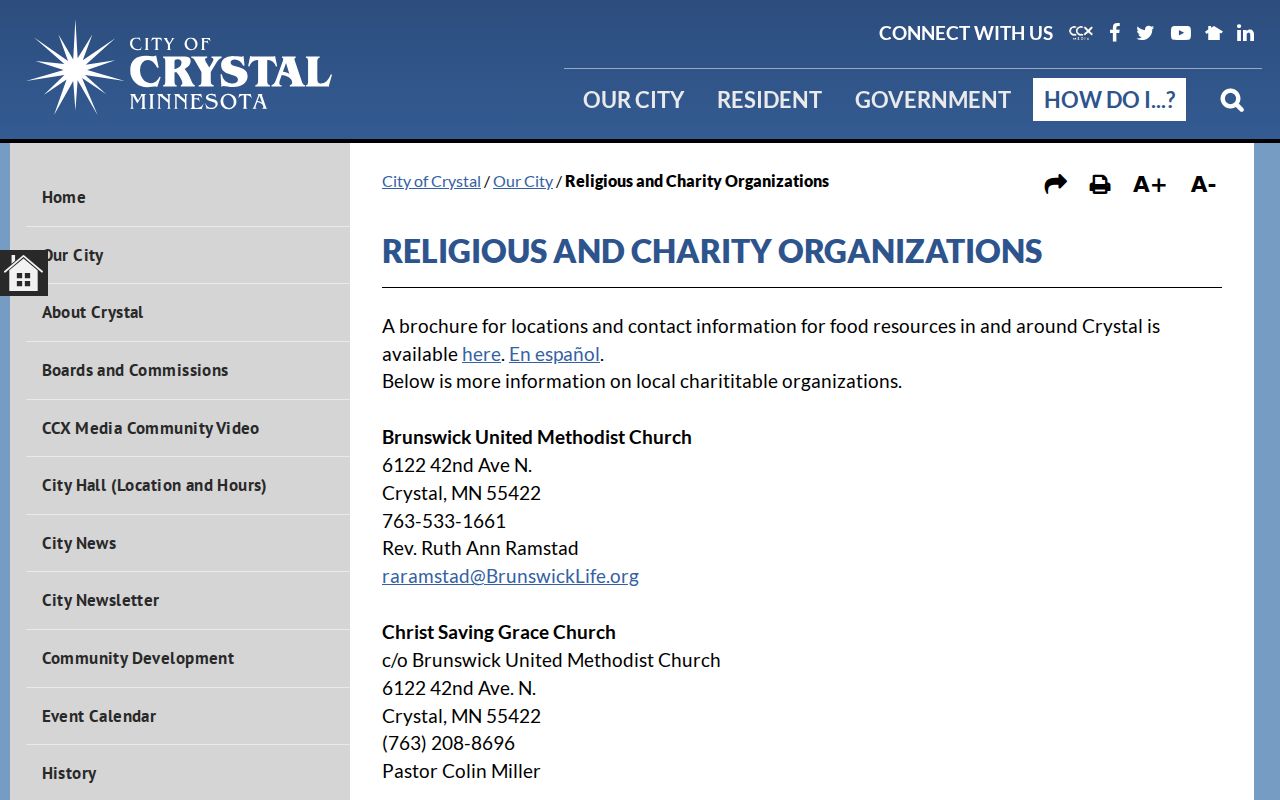
The directory points to organizations, not private rosters. Keep a neighbor inquiry focused on a lawful, specific public-record question and stop when a source’s access boundary is reached.
Lawful use. Crystal neighbor research can support civic curiosity and understanding a block’s public record. Do not use a map, record, or community source to monitor, contact, harass, or harm another person; Minnesota law protects against stalking and harassment.